Why GO Feature Flag?
Ship faster, reduce risk, and stay in control. GO Feature Flag gives you complete feature management — open source, self-hosted, and built on OpenFeature — without vendor lock-in or a per-seat bill.
Feature management without the lock-in or the bill
Feature flags should be simple, accessible, and yours. Most teams hit a wall where the tooling means a contract, a per-seat bill, and their flag data flowing through someone else’s servers.
GO Feature Flag takes the other path: a lightweight, 100% open-source solution you self-host, built on the OpenFeature standard so you’re never tied to a vendor. Start in minutes and keep every advanced capability as you grow.
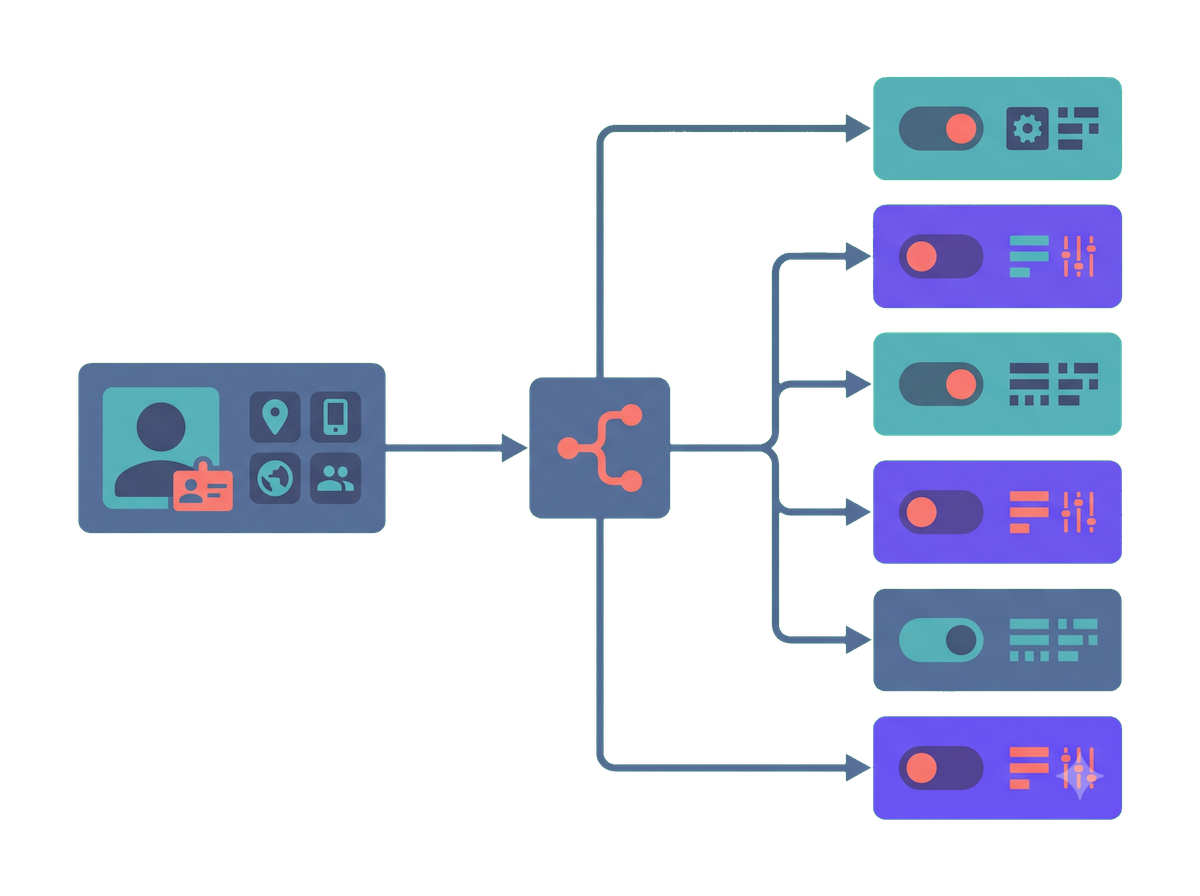
Why teams choose GO Feature Flag:
100% open source
MIT-licensed and free, forever. Read the code, contribute, and run it without a contract, a sales call, or a per-seat bill.
Open sourceSelf-hosted, your data stays yours
Run it on your own infrastructure. Flag evaluation and usage data never leave your environment — no third party in the request path.
Relay proxyBuilt on OpenFeature
Evaluate flags through the vendor-neutral OpenFeature SDKs. No proprietary client to rip out later — swap the backend without rewriting your code.
OpenFeatureEverything you need, nothing you don’t
GO Feature Flag is not just an on/off switch — it’s a complete feature-management suite that stays free and self-hosted.
- Targeting & segmentation. Show a feature only to the users who should see it, with rich rules on any context attribute.
- Rollout strategies. A/B testing, progressive ramps, and scheduled flag changes — all from configuration.
- Experimentation. Run measured experiments over a fixed window and keep the variation that actually wins.
- Data export. Stream evaluation data to S3, Google Cloud Storage, local files, Kafka, and more for your own analytics.
- Change notifications. Get alerted in Slack, Microsoft Teams, Discord, or a webhook the moment a flag changes.
Decouple deploy from release
Merge and deploy whenever you’re ready, then decide separately who sees the feature and when. The code goes out dark, gated behind a flag, so releasing is a configuration change — not another deploy.
How to use it: turn it on for internal users first, watch it in production, then widen to everyone.
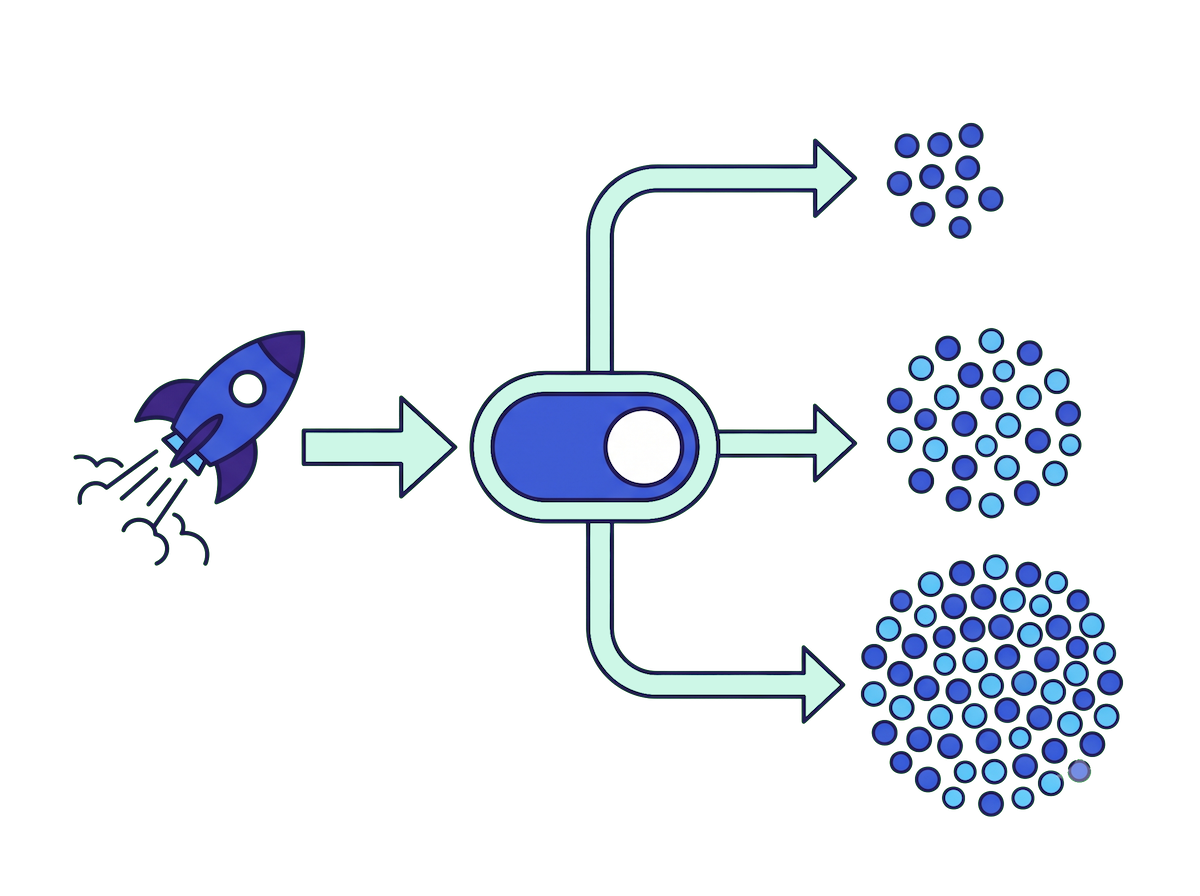
Default off. The new checkout ships with everything else, but only your team sees it until you widen.
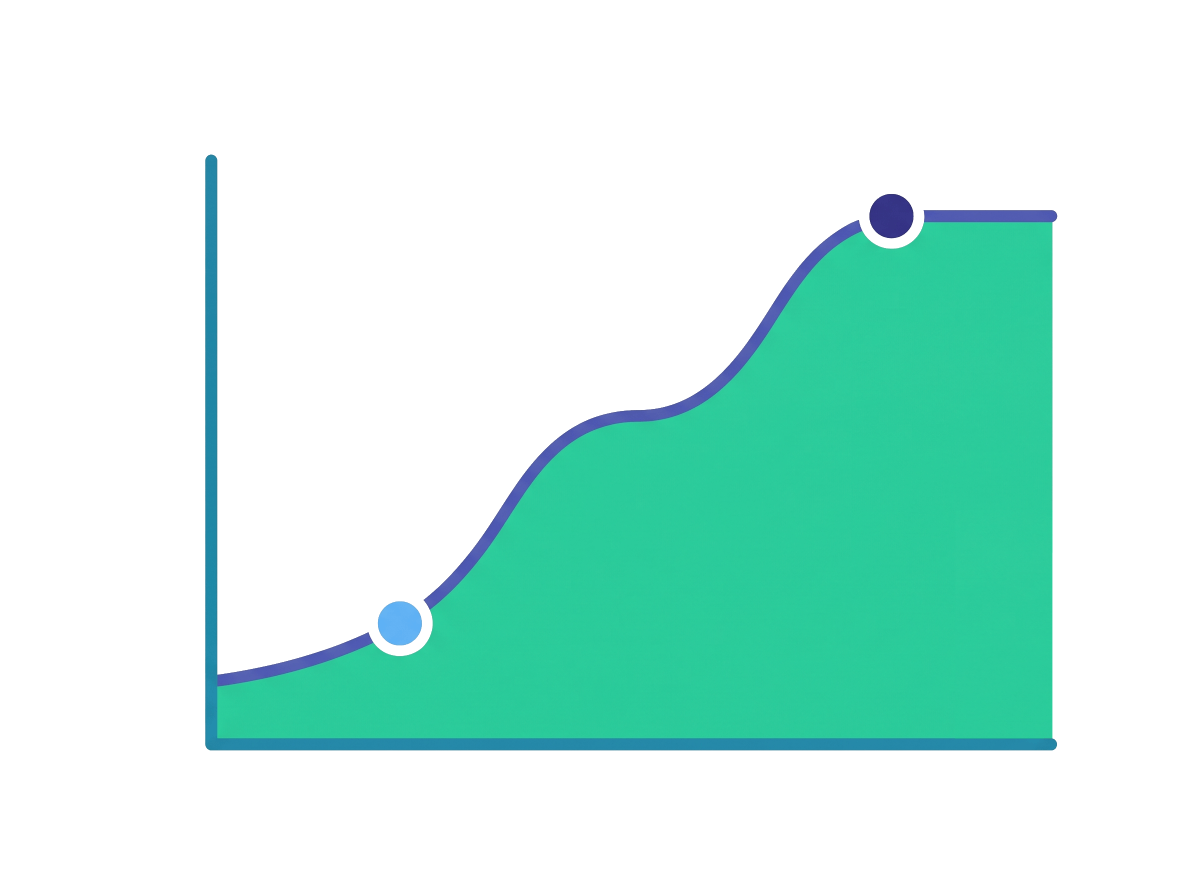
Roll out gradually, prove it as you go
Release to a small slice of traffic, watch your metrics, and ramp up only when the data stays green. Evaluation is deterministic on the targeting key, so a given user keeps a consistent experience while you widen the rollout.
How to use it: start at a few percent, then move to a progressive rollout to reach everyone safely.
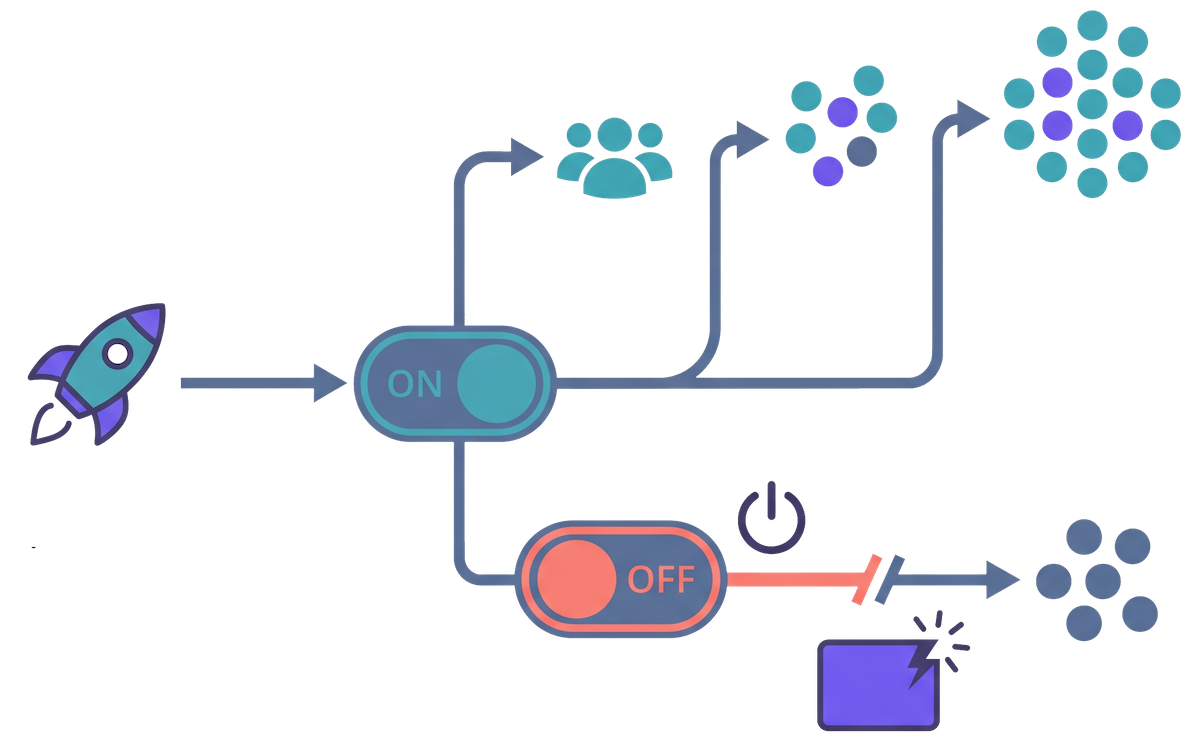
Turn anything off in seconds
When something misbehaves, you don’t debug under fire — you flip the switch. Change one line in the flag and every user drops back to the safe path on the relay proxy’s next poll.
How to use it: keep a safe default variation and a kill switch on every risky feature — no redeploy, no rollback.
GO Feature Flag vs. a SaaS feature-flag service
The same core capabilities as a commercial service — without the bill, the lock-in, or handing over your data.
| Capability | GO Feature Flag | Typical SaaS service |
|---|---|---|
| Pricing | Free — MIT licensed, no per-seat or per-MAU cost | Paid, usually per seat or per monthly active user |
| Hosting | Self-hosted on your own infrastructure | Vendor-hosted; your data leaves your environment |
| SDK standard | OpenFeature-native — vendor-neutral SDKs | Proprietary SDK; switching means a rewrite |
| Data ownership | Evaluation and usage data stay in your stack | Flag data flows through the vendor |
| Source code | Fully open — audit, fork, and contribute | Closed source |
Start flagging in minutes — for free
Self-hosted, OpenFeature-native, MIT-licensed. Get complete feature management without a contract or a per-seat bill.